Wayfind
Where individual plans become shared experiences.
Overview
Wayfind is a collaborative travel planning platform designed to make organising group trips more inclusive and transparent. Inspired by my own experience of feeling disconnected during a group holiday, the project explores how travellers can plan individually while still creating meaningful shared experiences together.
Rather than relying on one organiser to coordinate everything, Wayfind gives every traveller ownership of their own plans while making it easy to collaborate, discover overlapping activities and stay connected throughout the planning process.
The Problem
Planning a group trip often falls to a single organiser. As a result, other travellers become passive participants, receiving updates only after decisions have already been made.
During a recent trip, I experienced this first-hand. There was no shared space for discussion, no visibility into the planning process and no opportunity to contribute until the itinerary had already been decided.
This raised a simple question:
How might we create a planning experience where everyone feels involved before the trip even begins?
Research
To understand how existing platforms approached travel planning, I analysed several popular solutions and compared how they supported collaboration, organisation and group decision-making.
Although each platform solved part of the problem, none treated collaboration as the foundation of the experience.
Key Insights
Planning is often centralised
One person usually becomes responsible for organising the trip, while everyone else follows along.
Collaboration is an afterthought
Most platforms allow shared editing but don’t encourage meaningful participation or shared decision-making.
Communication becomes fragmented
Ideas, bookings and conversations are spread across multiple apps, making it difficult for everyone to stay informed.
Travellers have different priorities
Not everyone wants to follow the same itinerary. Group trips need flexibility as much as coordination.
Competitive Analysis
Google Travel
Excellent for discovering destinations and attractions but offers little support for collaborative planning.
TripIt
Organises travel confirmations effectively for individuals but provides limited functionality for groups planning together.
Wanderlog
The strongest competitor. While it includes shared editing and budgeting, collaboration often feels secondary to itinerary management. Shared trips still revolve around a single organiser rather than encouraging equal participation.
Designing for Different Travellers

Tom, 29
The Planner
“If I don’t organise it, who will?”
Goals
- Get real input from the group before finalising a plan
- Feel confident the itinerary reflects what everyone actually wants, not just what she assumed
Frustrations
- Rarely gets feedback until it’s too late to change anything
- Ends up carrying the full mental load of planning alone

Tiago, 27
The Passenger
“It’s easier to just go with it.”
Goals
- A low-pressure way to share a preference or idea
- Feel like his input matters without having to confront anyone
Frustrations
- Disagreeing after a plan exists feels disproportionate
- Ends up going along with things he wouldn’t have chosen

Beatriz, 28
The Logistics Checker
“Is this actually confirmed, or just an idea?”
Goals
- Clear visibility into what’s booked versus what’s still loose
- Peace of mind that the trip will actually run smoothly
Frustrations
- Details left unconfirmed until the last minute
- No single place to check transport, food, and timing all at once
Visual Identity
Rather than following the busy interfaces common in travel planning tools, I focused on creating a calm and structured experience. Clear hierarchy, generous spacing and subtle colour coding help distinguish personal information from shared activities, allowing users to understand complex travel plans at a glance.
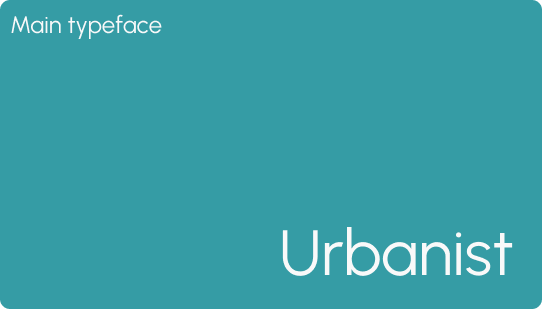
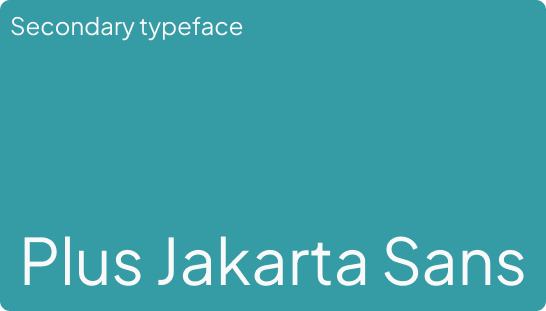
Typeface
Colour

Design Decision
Individual Plans, Shared Experiences
Travelling together doesn’t mean spending every moment together.
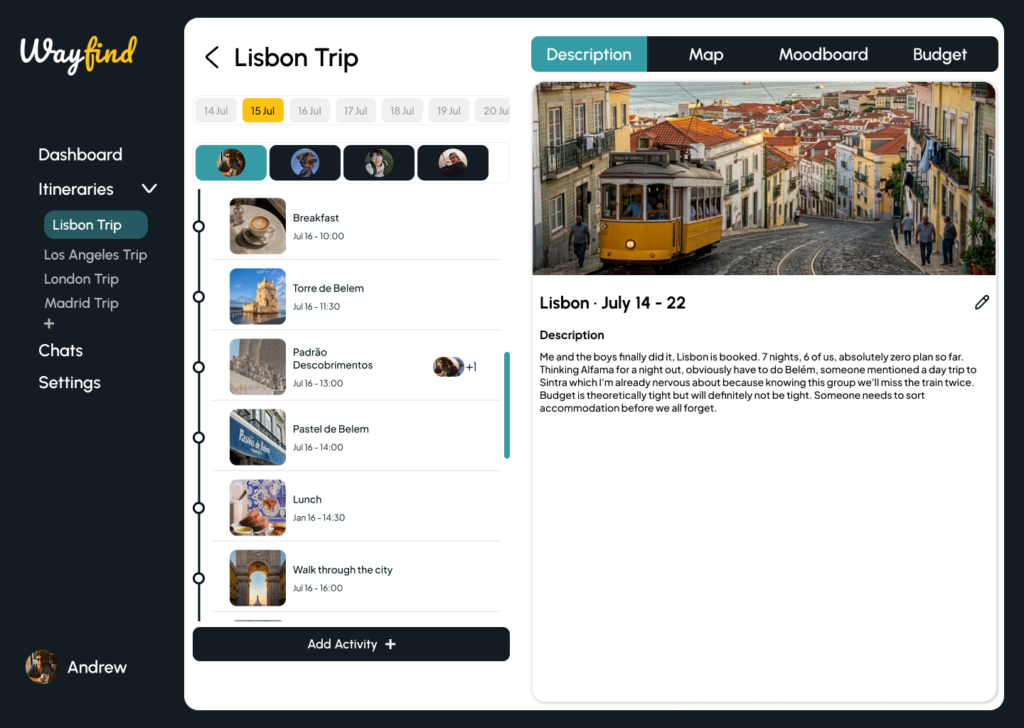
Instead of forcing everyone into a single itinerary, Wayfind allows each traveller to manage their own schedule while making those plans visible to the group. This creates opportunities for spontaneous collaboration without sacrificing personal freedom.
The shared timeline highlights confirmed group activities, helping travellers quickly identify where their individual plans overlap.
Planning Before Committing
Many group decisions begin as conversations rather than commitments.
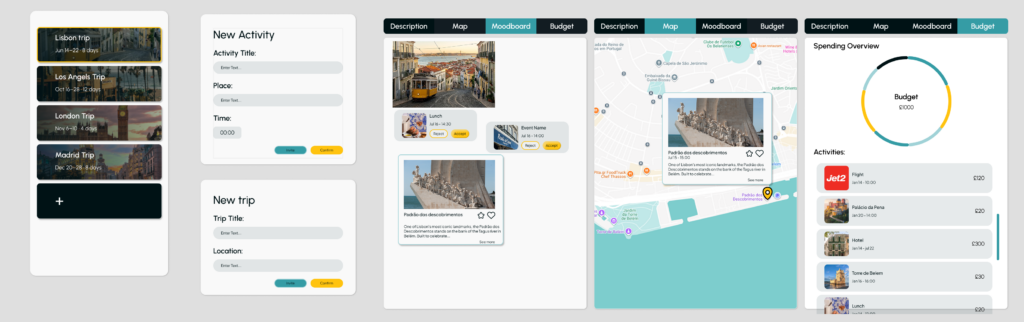
To support this, I introduced a Moodboard where anyone can suggest restaurants, attractions or activities before they become part of the itinerary. Group members can discuss ideas, express interest and vote, allowing plans to develop naturally instead of being decided by a single organiser.
Contextual Collaboration
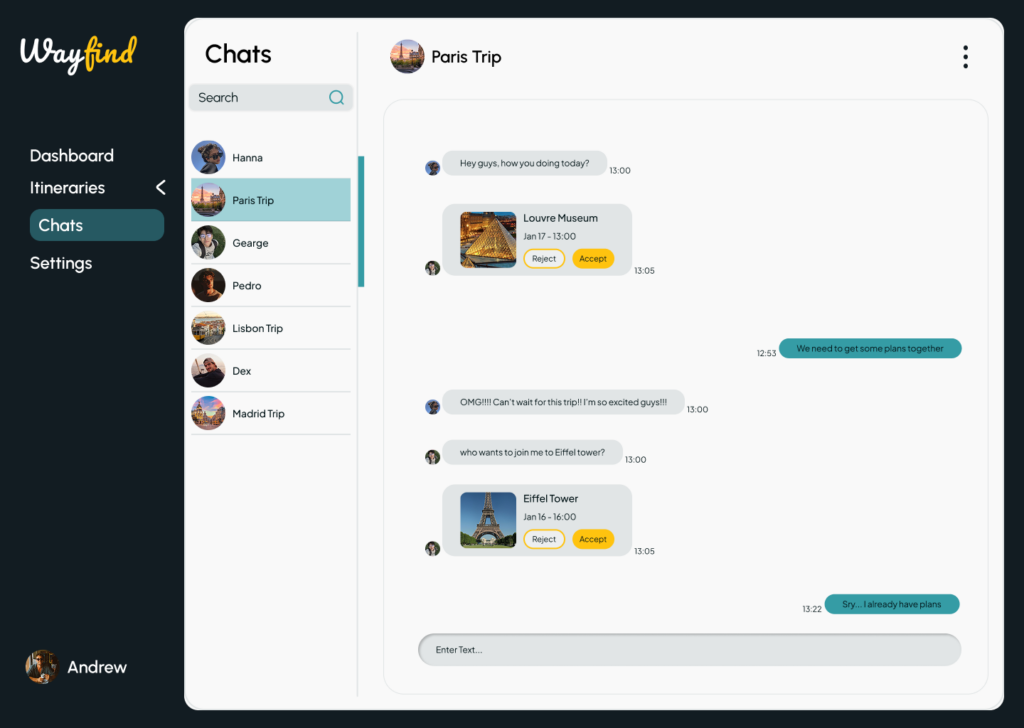
Group conversations often become difficult to follow when discussions happen across multiple messaging apps.
Rather than separating communication from planning, Wayfind connects conversations directly to activities, ideas and days within the itinerary. This keeps discussions organised and provides context for every decision.
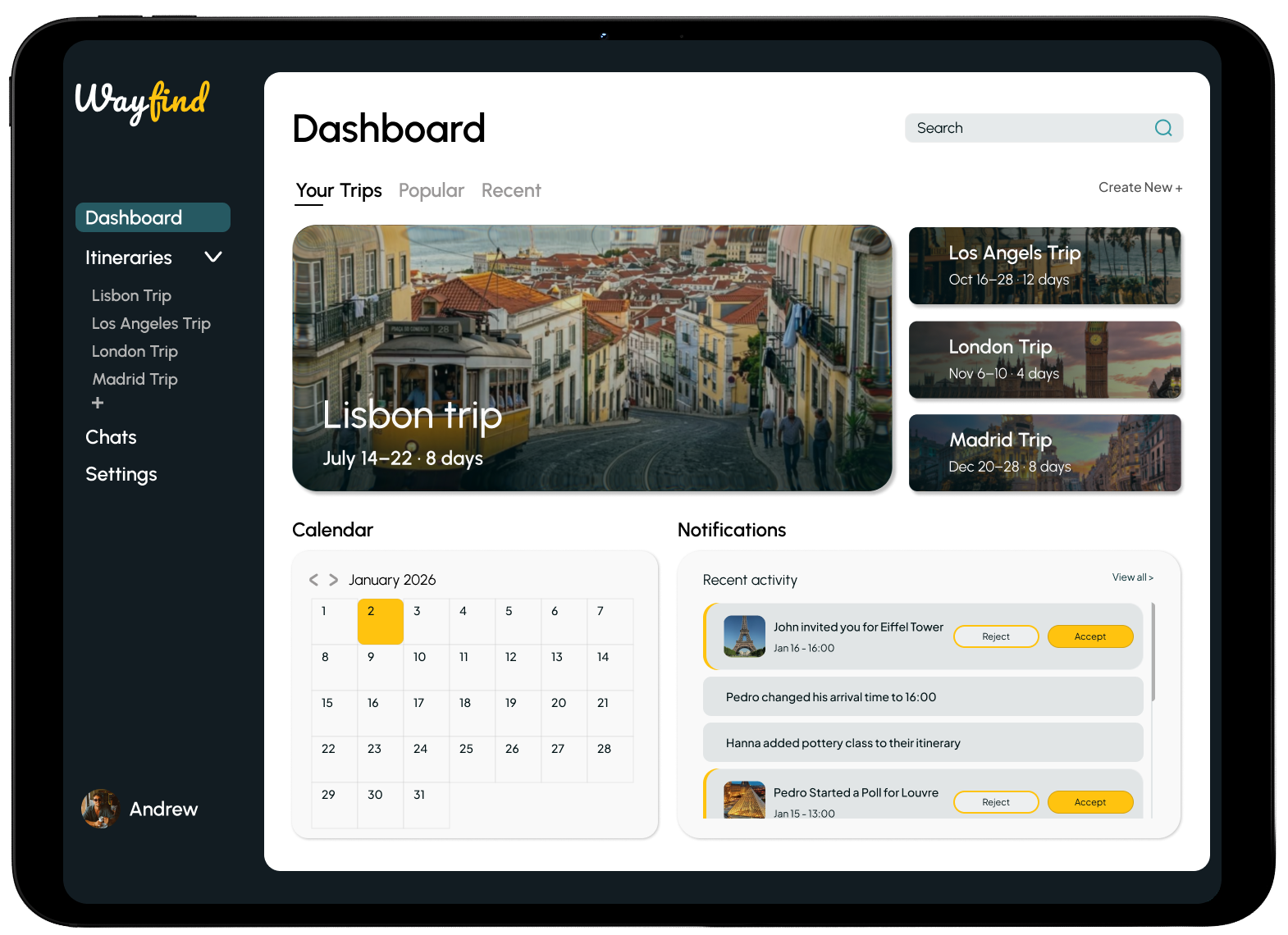
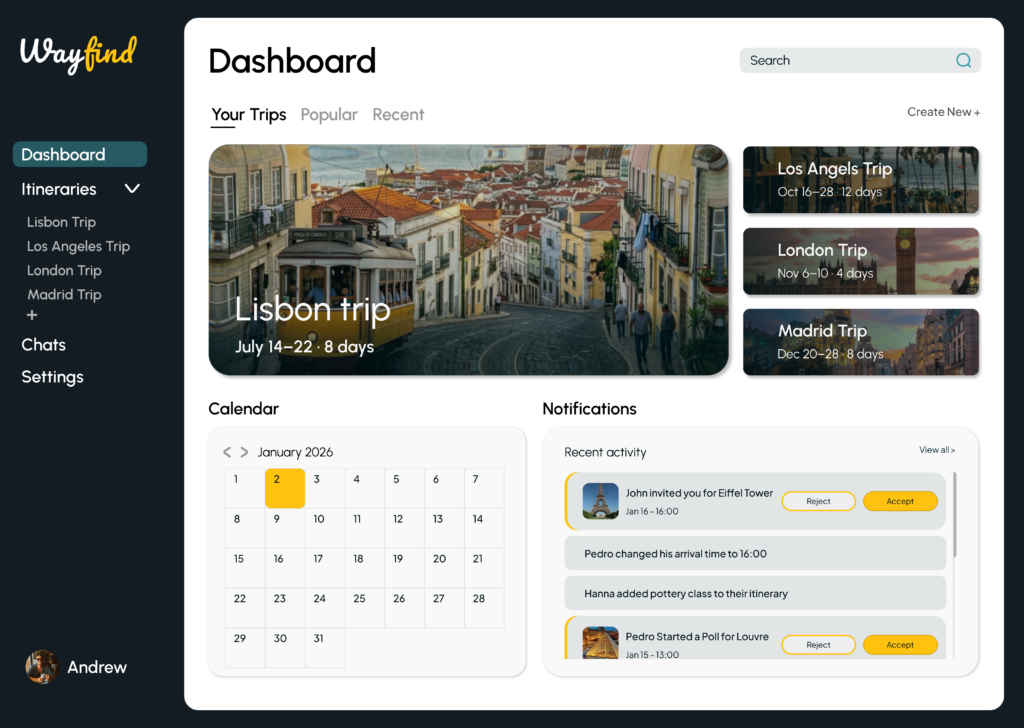
One Shared Dashboard
One of the biggest design challenges was presenting multiple layers of information without overwhelming the user.
The dashboard combines personal timelines, shared activities, budget tracking and upcoming plans into a single overview. This gives travellers a clear understanding of both their own schedule and the group’s progress without constantly switching between screens.
Final Outcome
Wayfind transforms group travel planning from a process managed by one organiser into a collaborative experience shared by everyone.
By combining individual itineraries with shared planning tools, the platform encourages flexibility while helping travellers stay connected before and during the trip.
Reflection
This project taught me that successful collaboration isn’t about making every decision together; it’s about allowing everyone to contribute.
Designing Wayfind challenged me to balance personal freedom with group coordination while presenting complex information clearly and intuitively.
If I continued developing the project, I would further refine the visual interface and validate the concept through user testing with groups of travellers. Observing how different groups naturally organise trips would help identify opportunities to simplify collaboration even further.